Investing in a custom metal building adds long-term value to your property, whether you’re in the heart of the Central Valley, the high desert of Nevada, or the rugged terrain of Oregon. At ProBuild Options, we’ve seen it all—and the secret to a building that lasts 30+ years isn’t just the steel; it’s the dirt underneath it.
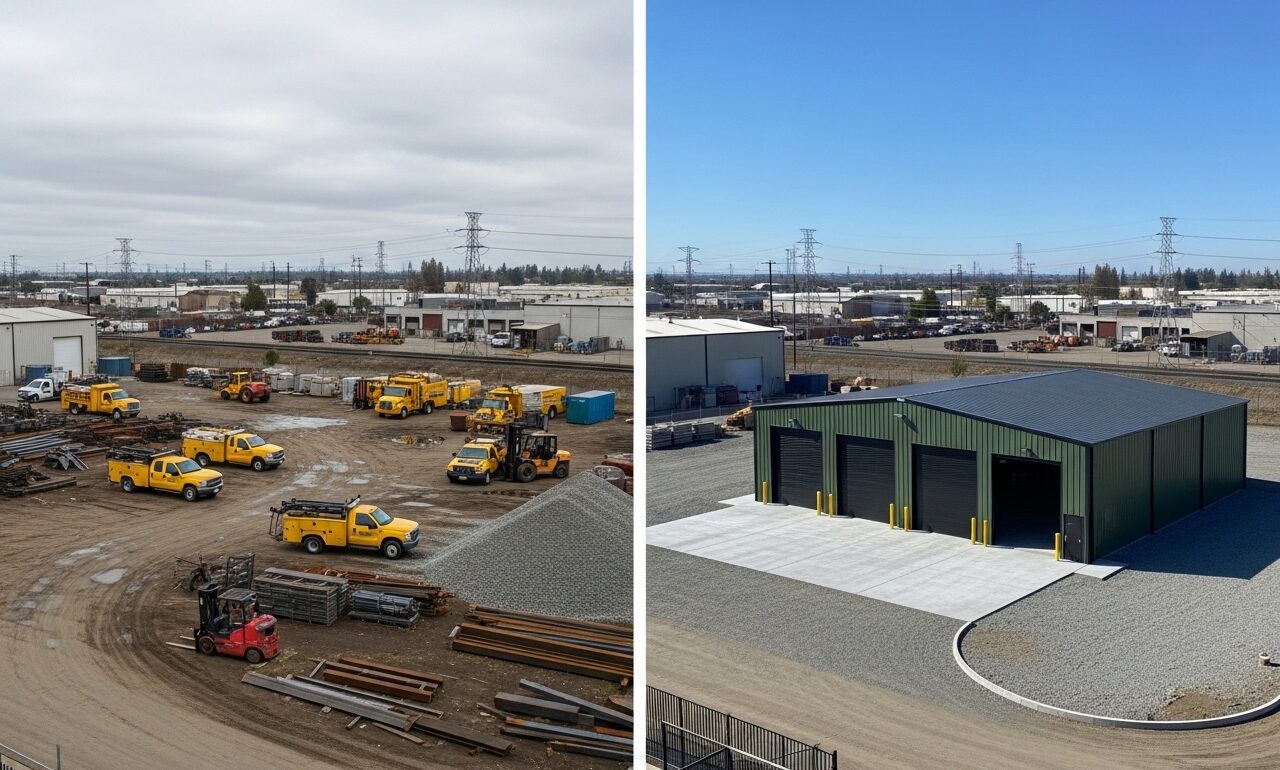
Before our installation crew arrives at your site, you need to ensure the ground is ready. Proper preparation prevents structural shifting, door misalignment, and drainage issues. Here is your essential checklist.
1. Choose Your Location Wisely
Think about the “flow” of your property.
Access: Can a truck and trailer reach the site? In mountainous areas of Oregon or rural Nevada, check for low-hanging branches or narrow gates.
Utilities: Always call 811 before you dig to locate underground power, gas, or water lines.
Sun & Wind: In the Central Valley, consider placing your building where it can benefit from natural shade to reduce cooling costs.
2. The 3-Inch Leveling Rule
This is the most critical step. A metal building is a rigid structure; if the foundation is uneven, the frame will be under constant stress.
The Standard: Your site must be level within 3 inches across the entire footprint.
Pro Tip: If your site has a significant slope, you may need to “cut” into the hill or build a retaining wall before the gravel or concrete is poured.
3. Select the Right Foundation for Your Climate
Depending on where you live, your foundation needs might change:
Concrete Slab: Ideal for California workshops and car enthusiasts. The slab should be the exact size of the building frame.
Gravel/Crushed Rock: A popular, cost-effective choice for agricultural storage in Oregon and Nevada. Ensure it is compacted to prevent settling.
Ground Anchors: If you are installing on dirt, we use specialized auger anchors to ensure the building meets local wind-load requirements.
4. Clear a 3-Foot “Safety Zone”
Our installation teams need space to move ladders and maneuver large steel panels.
Clear at least 3 to 4 feet of space around the entire perimeter.
Remove any debris, tall grass, or equipment that might interfere with the build.
5. Check Local State & County Codes
Permit requirements vary wildly between California, Nevada, and Oregon.
California: Often requires specific snow or wind load ratings depending on the county.
Nevada/Oregon: High-wind zones or heavy snow-load areas require reinforced steel gauges.
ProBuild Tip: We provide engineered drawings to help you navigate the permit process in your specific jurisdiction.
Built Tough for the West Coast
At ProBuild Options, we don’t just sell buildings; we provide peace of mind. From the design phase to the final bolt, we ensure your structure is built to handle the unique climates of the West.
📍 Serving Merced, Atwater, Turlock, and the entire Central Valley. 🌐 Now proudly serving all of California, Nevada, and Oregon!
📞 Call us today for a free quote on your custom steel garage or workshop!