
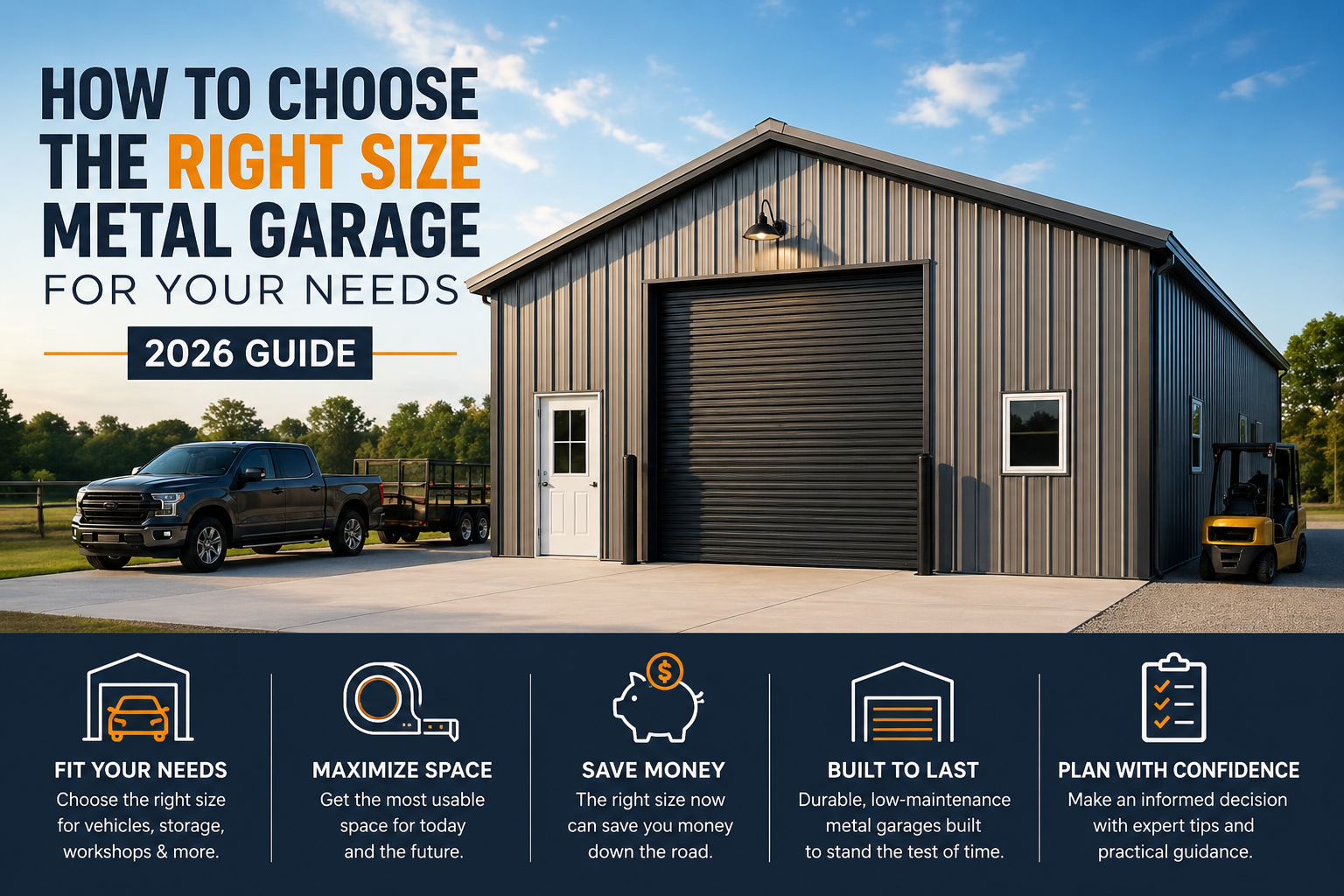
How to Choose the Right Size Metal Garage for Your Needs (2026 Guide)

ProBuild Options 2026 guide for metal garage sizes and steel building specifications with expert tips for residential and commercial storage

Choosing the right size metal garage is one of the most important decisions when planning your building. Whether you’re storing vehicles, creating a workshop, or adding extra storage, the right size will save you money and give you flexibility for the future.

In this guide, we’ll break down exactly how to choose the best size for your needs. 

đźš— What Will You Use Your Metal Garage For?

Start by identifying your main use:

  • Car or truck storage

  • RV or boat storage

  • Workshop or business use

  • Equipment or tool storage

👉 Your use determines your size, height, and door requirements.

📏 Standard Metal Garage Sizes

Here are the most common sizes and what they’re best for:

  • Single-Car (12Ă—20 – 12Ă—24): Ideal for one vehicle. The 24-foot depth is preferred to allow for a workbench or lawn equipment at the front.

  • Two-Car (20Ă—20 – 24Ă—24): The residential standard. A 24Ă—24 footprint is highly recommended for modern SUVs and trucks to ensure doors can open fully.

  • 2–3 Cars + Storage (30Ă—30 – 30Ă—40): These dimensions provide a comfortable buffer for three vehicles or a dedicated zone for household storage and seasonal gear.

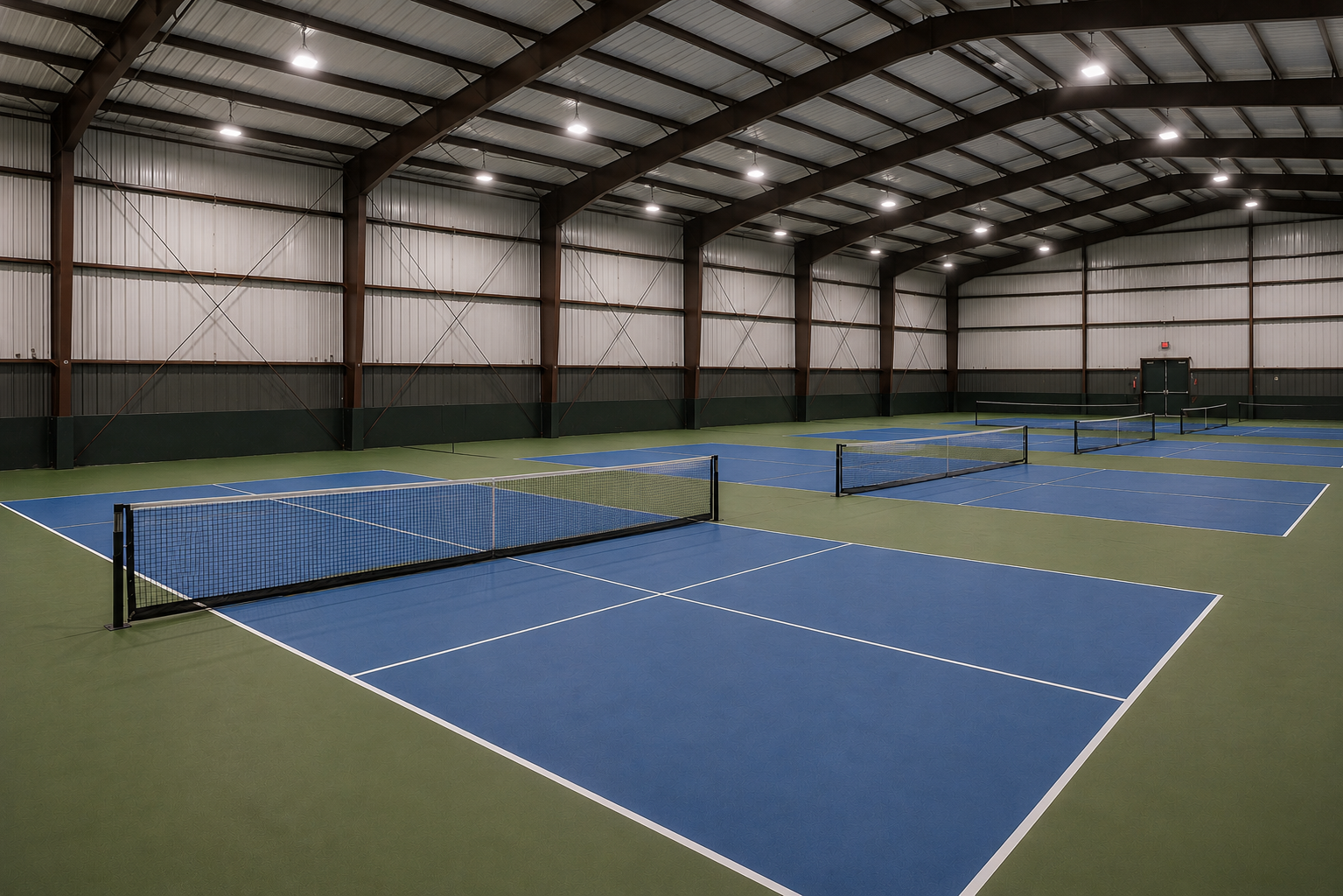
  • 3–4 Cars or Workshop (40Ă—30 – 40Ă—50): Designed for the hobbyist or collector. This size accommodates multiple vehicles while leaving ample room for heavy machinery, a home gym, or a professional-grade shop.
đźš™ How Much Space Does Each Vehicle Need?

Not all vehicles are the same size. Recommended space per vehicle:

  • Width (10–12 ft): This range ensures you can fully open doors on both sides and navigate the perimeter comfortably.

  • Length (20–24 ft): Essential for walking around the front or rear of the vehicle while the garage door is closed.

This gives you enough room to open doors comfortably, walk around the vehicle, avoid tight parking.

👉 Example:
A GMC Sierra 2500 needs more width and height than a standard car.

⬆️ Choosing the Right Height

Height is one of the most important (and most overlooked) factors.

Recommended heights:

  • 10 ft → basic clearance (tight fit)

  • 12 ft → ideal for trucks (most popular)

  • 14 ft+ → car lifts, RVs, or future upgrades

👉 Pro Tip:
Going taller now is cheaper than upgrading later.

🚪Doors & Layout: The Access Factor

Your doors are your “gateways,” so don’t skimp here.

  • 8Ă—8: Fine for small cars.

  • 10Ă—10: The Gold Standard. Most trucks and SUVs need this height and width to get in comfortably.

  • 12Ă—12: Best for high-profile vans or if you just want “easy mode” entry.

Don’t forget: Throw in a walk-in (man) door so you don’t have to hike up the big overhead door every time you just need a screwdriver.

Smart Strategy: If you’re torn between two sizes, size up. It’s way cheaper to add a few extra feet of steel now than it is to try and expand the building three years down the road. If the budget is tight, pick the bigger size and cut back on “extra” windows for now—you can always add those later!

Building in the Central Valley (Merced & Fresno)

If you’re local to us here in Merced, Fresno, or the surrounding areas, there are a few local “quirks” to keep in mind:

  • Permits: You’ll likely need them.

  • Weather: Wind ratings matter out here.

  • The Slab: Your concrete needs to be ready to go before the building crew shows up.

Bottom Line?  The perfect garage fits your cars, your hobbies, and your future plans. When in doubt, go a little bigger—your future self will thank you.

Share the Post:

Related Posts

Join Our Newsletter

Scroll to Top

Save up to 17% off on selected buildings

Based in Merced, California – Delivered across USA. Get your free quote today!